

E-Commerce License in Dubai 2026: Why Online Business, Digital Trade & Marketplace Selling Are Booming
Dubai’s business landscape is no longer defined only by retail stores, trading offices, or traditional commercial models. In 2026, one of the fastest-growing sectors reshaping the UAE market is e-commerce.
From Shopify brands and Amazon sellers to B2B digital wholesalers, social commerce entrepreneurs, dropshipping ventures, and GCC-wide online marketplaces, Dubai has become one of the region’s strongest launchpads for online business growth.
The UAE’s e-commerce market is projected to exceed $9.2 billion by 2026 according to UAE government guidance, while multiple industry sources estimate broader long-term expansion beyond that as digital adoption accelerates.
For entrepreneurs, this creates a major opportunity:
Dubai is no longer just a place to register a company—it is becoming a digital commerce gateway.
Why E-Commerce in Dubai Is Booming in 2026
Several major forces are driving this surge:
1. High Digital Adoption
Dubai has one of the world’s strongest internet penetration rates, mobile-first consumers, and increasing trust in online transactions.
2. Strategic Global Logistics
Dubai’s airports, ports, warehousing ecosystems, and fulfillment networks make it ideal for:
- Cross-border trade
- GCC distribution
- Amazon FBA
- Noon marketplace
- Dropshipping
- Direct-to-consumer brands
3. Government-Backed Digital Economy Expansion
Dubai’s D33 agenda and broader innovation strategies continue to prioritize:
- Digital trade
- Technology-led startups
- SME scalability
- International commerce
4. Licensing Accessibility
Entrepreneurs can now choose from:
- Mainland e-commerce licenses
- Free Zone digital commerce licenses
- E-Trader permits (limited structures)
- Specialized marketplace and import/export models
This flexibility allows founders to align setup with business model rather than forcing one-size-fits-all licensing.
What Is an E-Commerce License in Dubai?
An e-commerce license is the legal authorization that allows businesses to sell goods or services online through websites, marketplaces, apps, or digital channels.
This may include:
- Physical product sales
- Online retail stores
- Digital products
- Dropshipping
- Marketplace trading
- Subscription commerce
- B2B online trade
- Social media selling
Without the right license, businesses may face:
- Payment gateway restrictions
- Banking issues
- Marketplace approval problems
- Compliance penalties
In short:
If you want scalability, credibility, and legal security, licensing matters.
Mainland vs Free Zone for E-Commerce: Which Is Better?
This is one of the most important strategic decisions for founders.
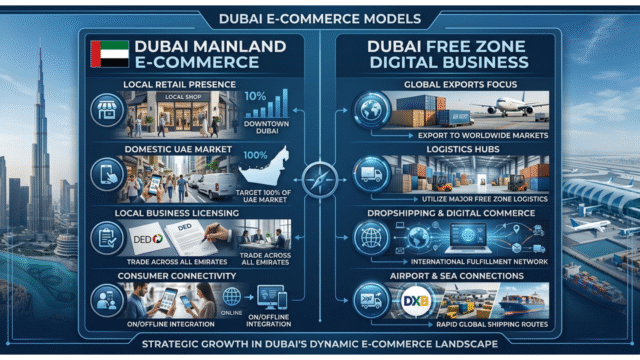
Mainland E-Commerce License
Best for:
- Direct UAE customer sales
- Local warehousing
- Retail + online hybrid businesses
- Government and corporate contracts
- Physical expansion
Advantages:
- Broad UAE market access
- Local invoicing flexibility
- Stronger domestic presence
Consideration:
Typically, higher operational costs depending on office and setup model.
Free Zone E-Commerce License
Best for:
- International selling
- Dropshipping
- Digital products
- Startup testing
- GCC export models
- Lean founder operations
Advantages:
- 100% foreign ownership
- Lower startup barriers in many zones
- Fast incorporation
- Flexible packages
Consideration:
Free Zone selection matters heavily—logistics, payment gateways, warehousing, and business activity alignment differ significantly. Community discussions increasingly emphasize that choosing solely on low cost can create scaling issues later.
Dubai’s Most Popular E-Commerce Models in 2026
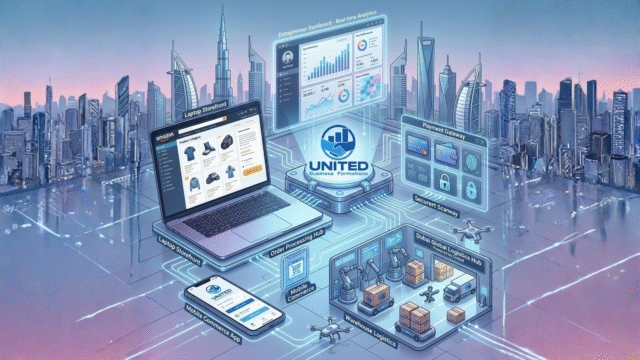
Shopify / Independent Store
Best for founders building long-term brand equity.
Amazon UAE / Noon Marketplace
Best for marketplace volume and logistics leverage.
Drop shipping
Best for lower inventory startup models.
Social Commerce
Instagram, TikTok Shop-style selling, WhatsApp commerce.
B2B Wholesale E-Commerce
Fast-growing among international SMEs using Dubai as a regional distribution hub.
Payment Gateways & Banking: The Hidden Success Factor

Many first-time founders focus only on license cost.
This is a mistake.
Your e-commerce success also depends on:
- Payment gateway approvals
- Banking compatibility
- Refund structures
- AML compliance
- Product category legality
- VAT registration where applicable
A poorly structured setup can delay:
- Stripe or merchant approvals
- Corporate banking
- Marketplace onboarding
Founder reality:
The cheapest license is not always the most scalable license.
Key Costs Entrepreneurs Should Expect
Costs vary widely based on:
- License authority
- Business activity
- Visa allocation
- Warehousing
- Customs requirements
- Office needs
- Payment integrations
Industry guides commonly place entry-level free zone setups in lower startup bands, while dedicated logistics ecosystems such as Dubai CommerCity can better suit inventory-heavy businesses.
Common Mistakes New E-Commerce Entrepreneurs Make
1. Choosing the wrong business activity
This can affect customs, payments, and legal scope.
2. Ignoring VAT and corporate tax
Digital businesses still require compliance.
3. Selecting a Free Zone based only on price
Infrastructure matters.
4. Overlooking logistics
Shipping speed impacts profitability.
5. Banking too late
Bank readiness should be planned before launch.
Why Dubai Is Especially Attractive for Indian, GCC & Global Entrepreneurs
Dubai offers:
- Geographic access to Europe, Asia, and Africa
- International brand credibility
- Multi-currency flexibility
- Global logistics
- Strong SME ecosystem
- Digital-first infrastructure
For founders from India, South Asia, and emerging markets, Dubai increasingly functions as both a regional sales market and an international expansion base.
What Smart E-Commerce Founders Should Do in 2026
Before Launch:
- Choose correct activity
- Decide Mainland vs Free Zone
- Evaluate warehousing needs
- Plan payment gateway
- Understand tax
- Prepare bank documentation
After Launch:
- Build digital infrastructure
- Optimize logistics
- Track VAT/compliance
- Focus on customer trust
- Scale strategically
Final Thought: Dubai Is Becoming the E-Commerce Capital of Opportunity
In 2026, Dubai’s online business environment is no longer just promising—it is highly strategic.
Whether you are:
- Launching a D2C brand
- Building an Amazon business
- Selling digital products
- Expanding from India
- Creating a GCC marketplace
Dubai offers one of the strongest ecosystems for structured digital entrepreneurship.
But success depends on one major factor:
Your license structure must match your business model.
The winners in Dubai’s e-commerce boom will not simply be those who launch first—
They will be those who structure smarter.
Need Expert Guidance?
United Business Formations helps entrepreneurs choose the right e-commerce business activity, Free Zone or Mainland structure, compliance path, and strategic setup model for sustainable growth in Dubai.
Launch digitally. Structure legally. Scale globally.
